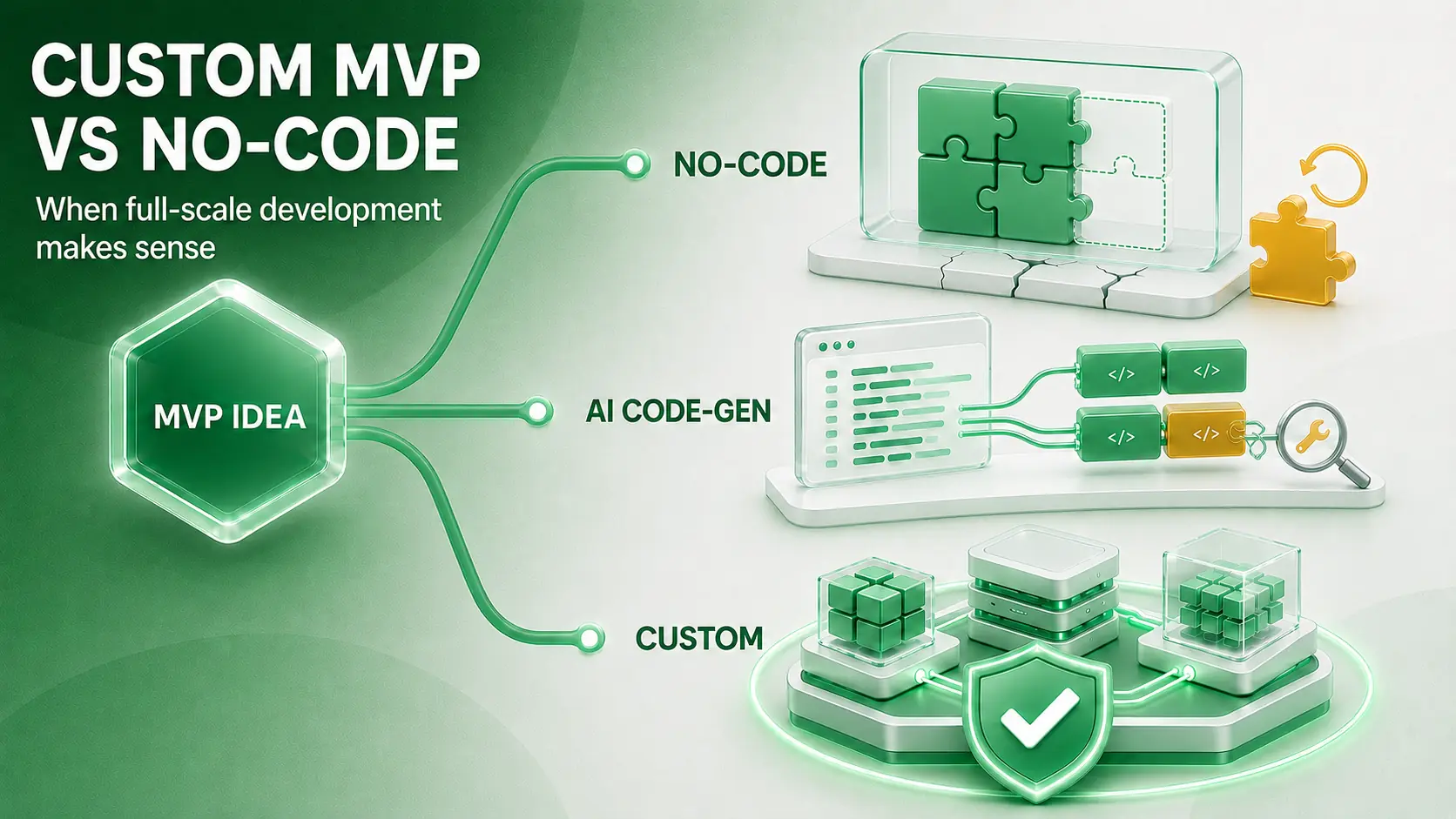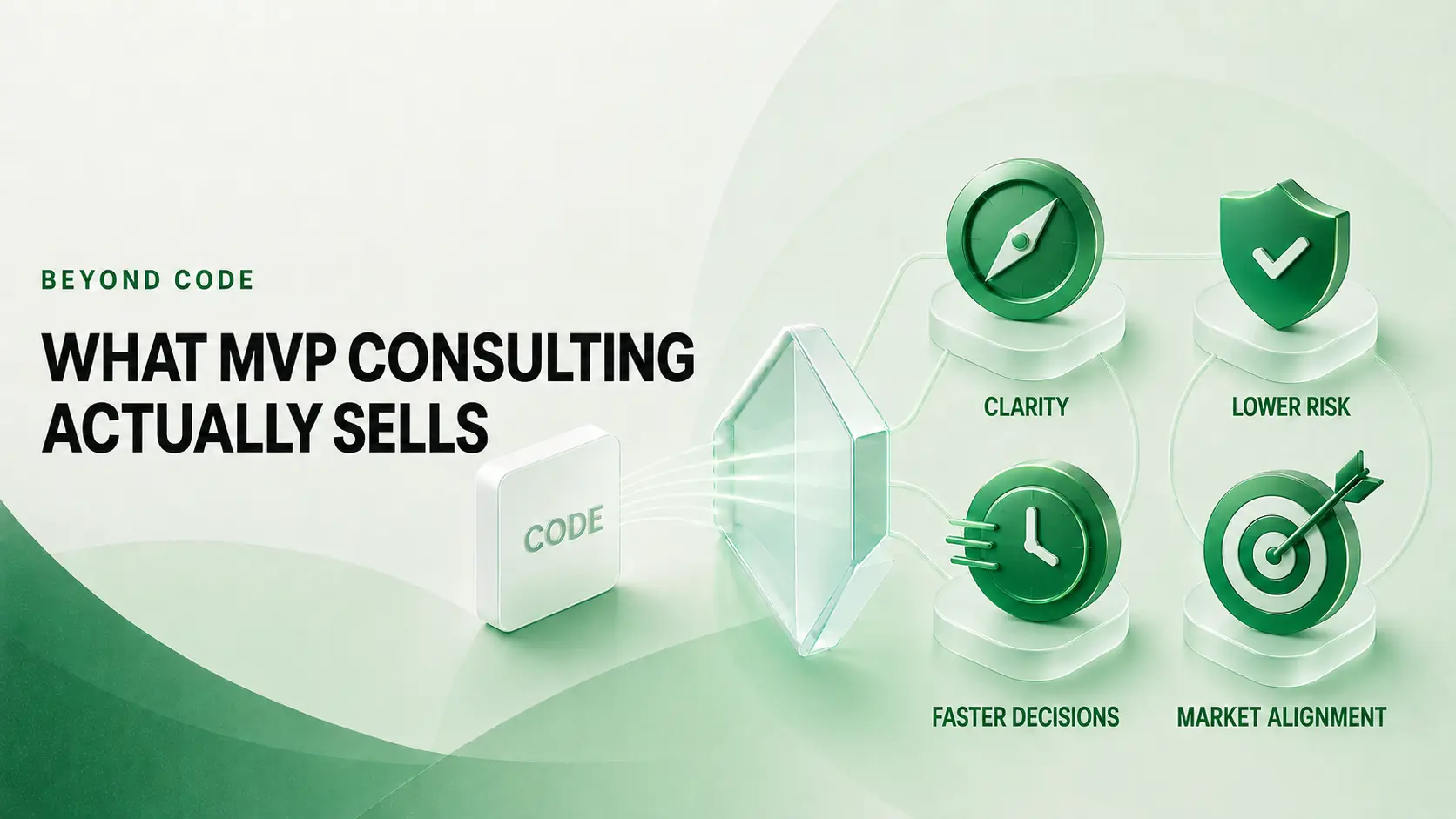
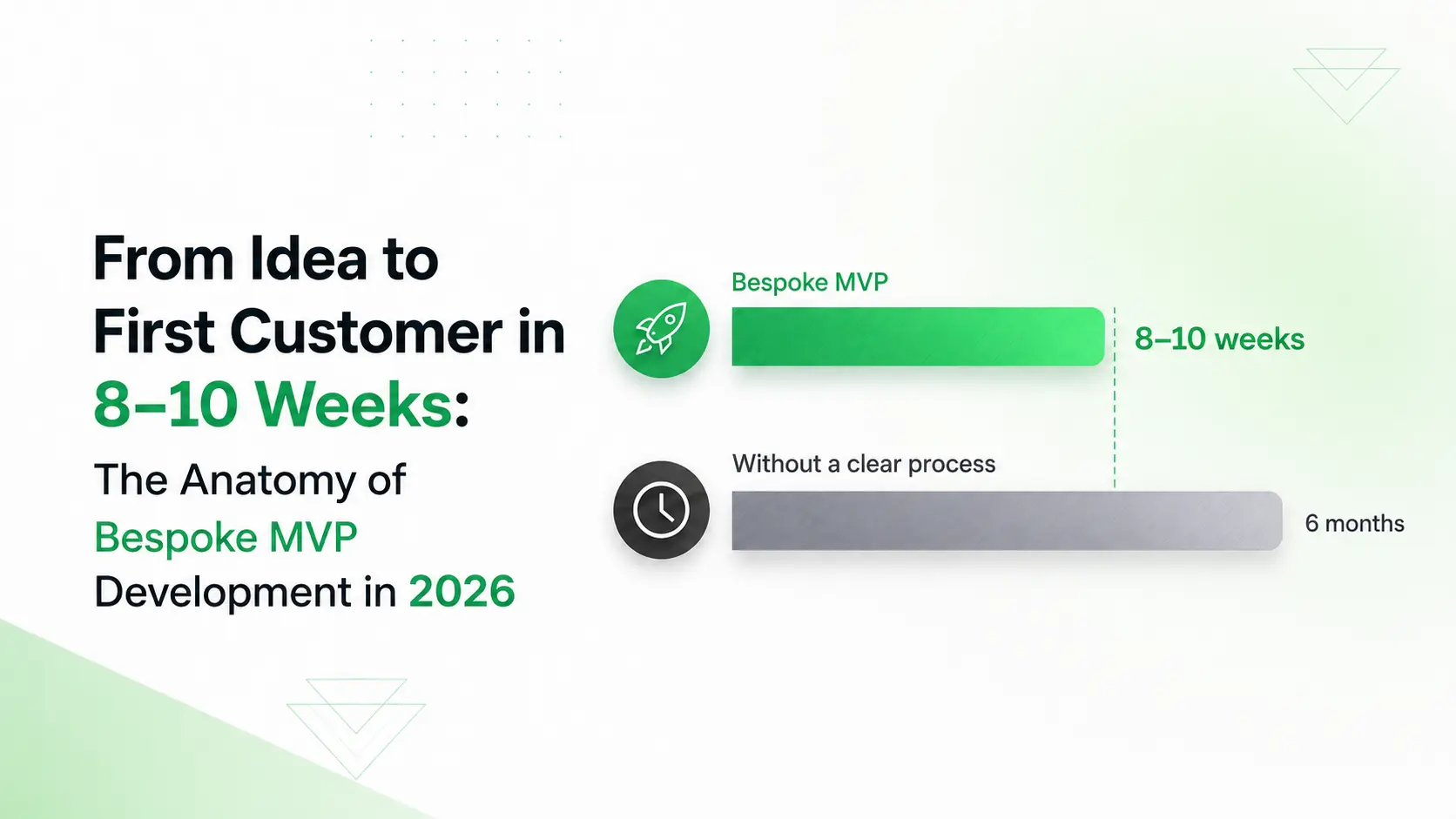
Bespoke MVP development means building a minimum viable product from scratch, shaped around your specific business model and your specific user - with no off-the-shelf templates involved. Unlike a no-code MVP or a template-based solution, custom MVP development gives you full control over the architecture and how fast you can scale. The core benefit of MVP development services built this way is simple: a product ready to onboard real customers in 8–10 weeks, not six months.
Why Most MVPs Die Before They Ever Launch
The idea is there. The investor is waiting for numbers. There's no technical co-founder. And every week without a product is money draining away. According to CB Insights research, running out of capital is almost always the final cause of a startup's death - but rarely the root cause. In 43% of cases, what's actually hiding underneath is a lack of product-market fit: the team either built for too long, or built the wrong thing entirely.
This pattern repeats constantly, and the reason is rarely the idea itself. It's the approach. A startup MVP thrown together in a rush, or handed off entirely to an outsourced team with no real process, usually doesn't survive long enough to attract serious funding.
Custom MVP development isn't just "coding for hire." It's a strategic tool - a way to test a hypothesis on real people as fast as possible and shrink your time to market without sacrificing quality. This article walks through the anatomy of bespoke MVP development step by step: how it differs from no-code and template-based approaches, what each of the 8–10 weeks actually looks like from the inside, and what it realistically costs.
Three Paths to Your First Product - and Where Each One Hits a Ceiling
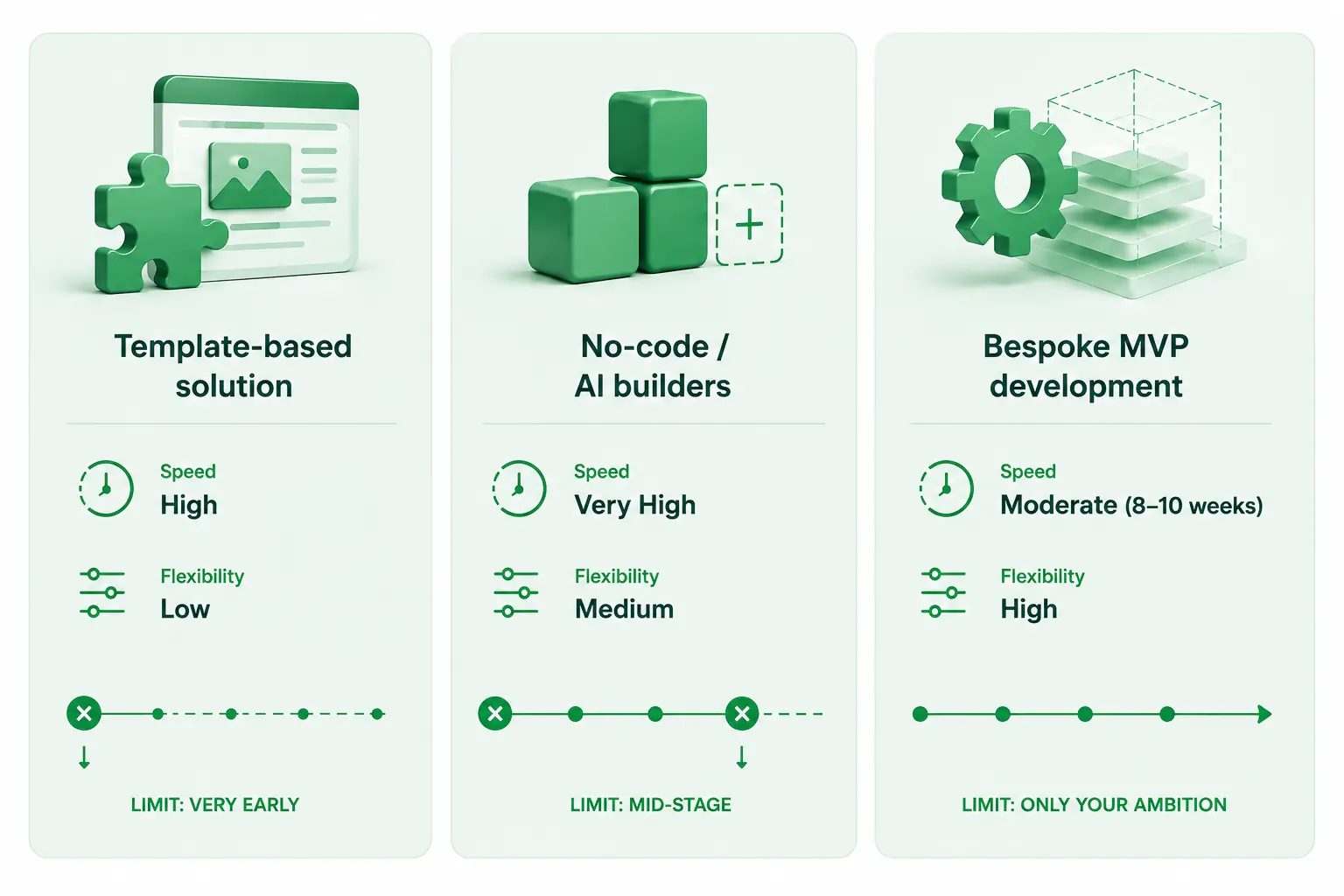
In plain terms: a bespoke MVP is a product designed and built specifically around your business, your users, and your monetization model. No template underneath.
There are generally three ways to build a first product:
| Approach | Speed to Launch | Flexibility | Where It Leads |
|---|---|---|---|
| Template-based solution | High | Low | Limited scale, struggles with any unique flow |
| No-code / AI builders (Bubble, Webflow, Bolt, Lovable) | Very high | Medium | Fine for testing an idea, weak for complex logic or integrations |
| Bespoke MVP development | Moderate, 8–10 weeks | High | A product that can actually grow with the business |
A template-based solution saves you weeks at the start, but it almost always hits a ceiling - a cookie-cutter approach works fine as long as your product looks like hundreds of others. The moment unique logic shows up - subscriptions, complex user roles, non-standard integrations - the template starts getting in the way instead of helping.
A no-code MVP is great for validating an idea over a weekend. But scaling that product past a hundred users, or building an in-house development team to maintain it long-term, is a whole different - and not cheap - story.
Custom MVP development and custom software development in general make sense when the product has complex business logic, needs its own integrations, or is preparing to raise investment - investors scrutinize the architecture just as closely as the metrics.
Nine Weeks from Idea to First Customers: A Real-World Scenario
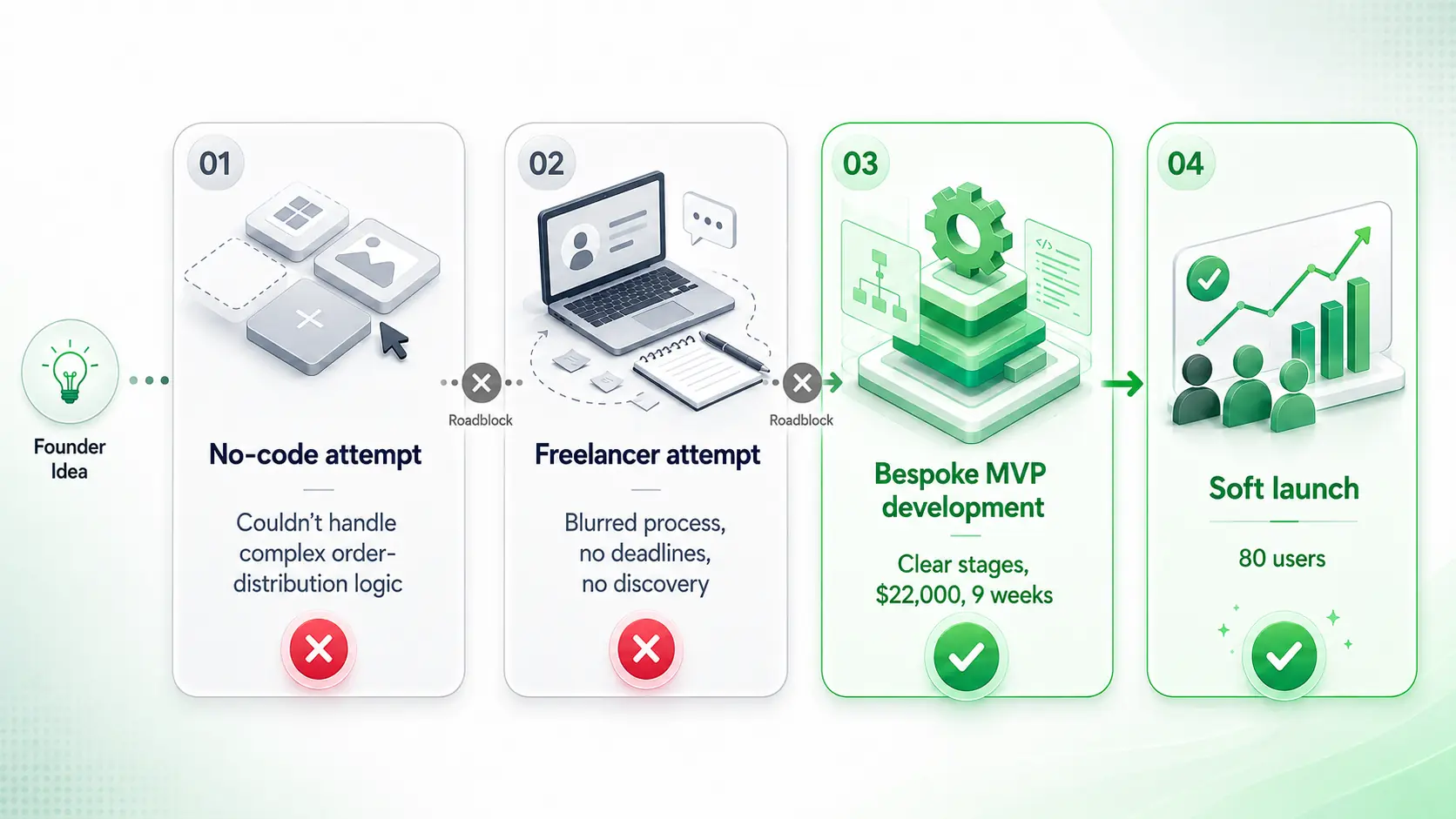
Let's walk through a scenario we see regularly - this is a generalized, illustrative example of the typical path our clients take, not the story of one specific company.
Picture a founder building a B2B SaaS product for logistics companies - a tool that automates order distribution among drivers. Budget is tight, an investor is waiting for numbers by the end of the quarter, and there's no technical co-founder.
She first tried putting together a startup MVP on a no-code platform: fast, cheap - but the order-distribution logic turned out to be too complex for the builder. The algorithm simply didn't fit into the available blocks. Hiring a part-time freelancer didn't work either: without a proper product discovery phase, the build sprawled into open-ended technical discussions with no deadlines.
Eventually she turned to bespoke MVP development, where every stage had a clear timeline. The team didn't start with code - they started with interviews with dispatchers and logistics staff to understand the actual workflow. The MVP cost came out to roughly $22,000 - a significant chunk of an early-stage budget, but compared to months of failed attempts, the investment looked reasonable.
Partway through the project, a snag came up: integrating with the client's legacy accounting system took a week longer than planned, because the old API had essentially no usable documentation. The team was upfront about the delay at the next demo and adjusted the plan instead of staying quiet and scrambling to catch up.
Nine weeks in, the product went out in a soft launch strategy and picked up 80 early users among local logistics companies. The feedback confirmed market validation of the core hypothesis and early signs of product-market fit, while also surfacing a clear need for a driver-facing mobile app - great material for the next iteration.
The takeaway: iterative development only works when the first version is honest enough to expose real gaps, instead of hiding them behind polished design.
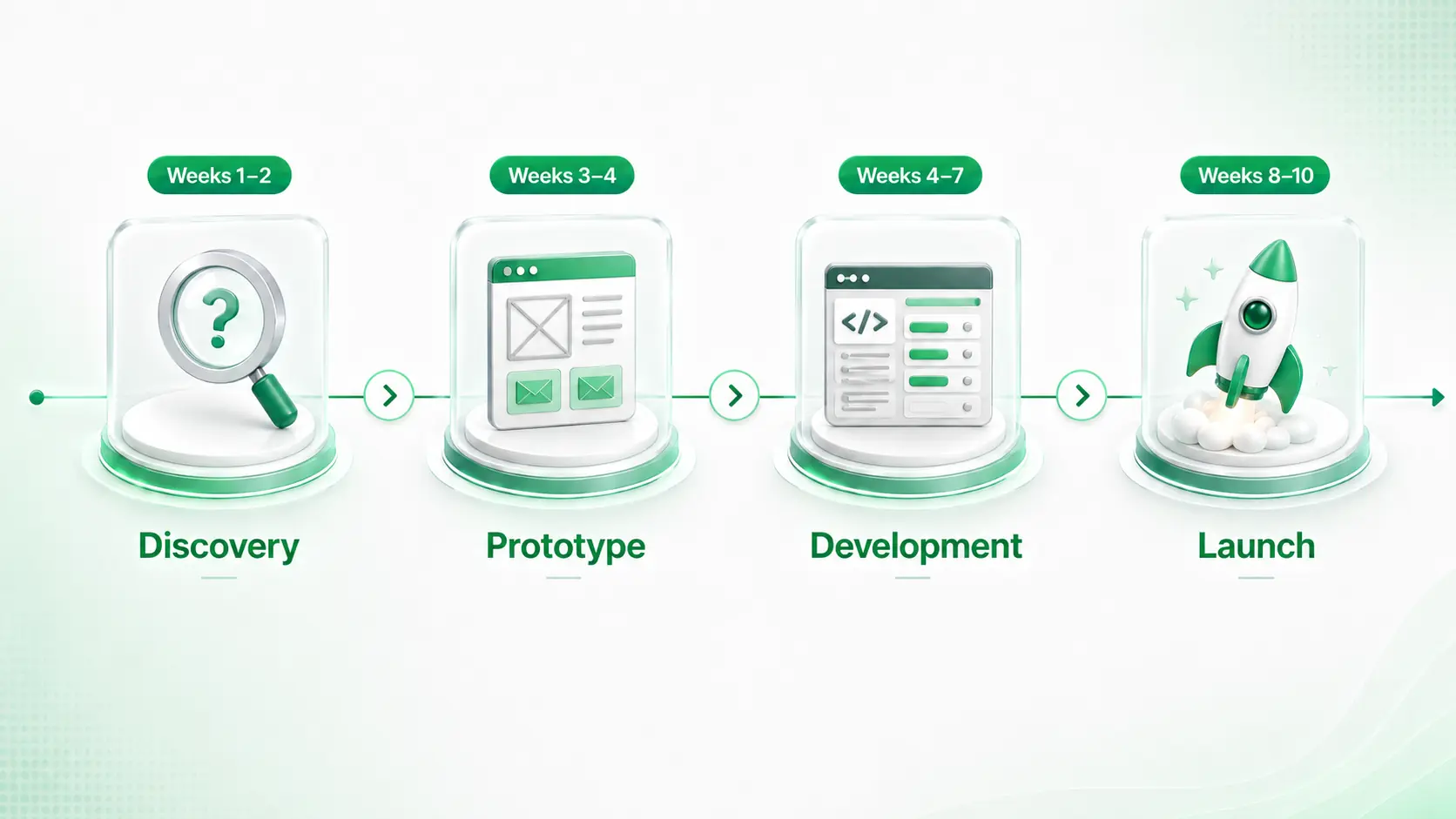
Weeks 1–2: Why Everything Starts Before a Single Line of Code
Solid MVP development services always start with questions, not code. The first two weeks are the product discovery phase. This means interviews with real or prospective users, competitor analysis, and testing hypotheses against data - not the founder's gut feeling.
The key tool here is the jobs-to-be-done framework. Instead of asking "what features do we need," the team asks a different question: "what job is the user trying to get done, and how are they solving it today?" This shifts the focus from features to the actual problem - and often reveals that half the planned functionality isn't critical for launch at all.
In parallel, the team works on user story mapping - breaking the entire user journey down into concrete scenarios and deciding which ones are essential for a minimum viable product and which can wait for version two.
This phase shouldn't end with a 40-slide deck. It should end with three concrete deliverables: a product brief that pins down the problem, the user persona, and the success criteria (without it, the team builds what it heard, not what's actually needed); a prioritized list of user stories; and a list of the riskiest assumptions the team plans to test first.
Weeks 3–4: The Prototype That Replaces a Month of Development
Design at this stage isn't about looking good - it's about validation. The team starts with wireframes: deliberately plain, black-and-white layouts that show screen structure without any visual noise to distract from the logic.
From there, the wireframes turn into an interactive prototype - a clickable model that can be shown to real users before a single line of production code is written. That's the whole point of rapid prototyping: testing decisions in days, not weeks of development.
The team also maps out the user flow for every key scenario - from sign-up to the moment the user actually gets value from the product. If test users get lost or stall at a specific step, that's a signal to rework the flow while it still costs an hour of a designer's time, not a week of a developer's.
Skipping prototype testing to save time is a false economy. Fixing logic at the mockup stage takes an hour. The same fix after it's already been coded can take a couple of days, and often means rewriting part of the backend too.
Before development starts, the deliverables should be: an approved clickable prototype, a documented user flow for the core scenarios, and a screen list signed off by the dev team.
Weeks 4–7: Building It Once Instead of Twice
Tech stack selection at this stage comes down to concrete constraints: how many users the product needs to support within a year, which integrations are non-negotiable, and how much bandwidth the team will have for maintenance after launch. Picking the right stack gives you scalable architecture from day one, so you're not rewriting everything the moment you hit your first hundred paying customers.
Development runs through agile development sprints: the team shows the client working software every week or two, instead of disappearing for two months with a promise that it'll "be ready soon." This is iterative development in practice - every sprint adds validated value, not just more lines of code.
This is also where scope discipline gets tested the hardest. There's always the temptation to bolt on one more feature "because the investor asked" or "because a competitor has it." Scope discipline means being honest: this feature is great, but it's not for version 1.0. And that discipline is what makes the product stronger, not weaker.
By 2026, AI-assisted development will be standard practice for most teams: GitHub Copilot, Cursor, and similar tools speed up routine coding by a significant margin. But AI integration in MVP as a standalone product feature isn't a given - it's a case-by-case decision. Not every MVP needs AI baked in, and adding it "just in case" is just another form of feature creep.
The speed that AI-assisted development provides doesn't excuse a team from basic engineering discipline - if anything, it adds new items to the checklist. AI-generated code needs to be reviewed just as carefully as human-written code, arguably more so: checking for vulnerabilities, scanning dependencies for known threats, thinking through threat models for the new attack surfaces that come with new code, and always testing the edge cases that AI tends to skip.
There's a real difference between using AI as a tool in the hands of an experienced engineer and pure vibe coding - generating code with no architectural plan and no real understanding of what's happening under the hood. For custom MVP development meant to survive contact with paying customers, the second option isn't acceptable: AI speeds up the hands, but an experienced human still makes the decisions.
Weeks 8–10: Launch Isn't the Finish Line - It's the Starting Gun
QA at this stage is the last real chance to catch a problem before a paying customer does. The testing isn't just "does the button work" - it's real-world scenarios. What happens if a user loses their connection mid-action, enters data in an unexpected format, or opens the product on a phone even though it was designed for desktop?
Instead of a loud, all-at-once release, the team goes with a soft launch strategy: rolling out to a narrow, carefully chosen audience of 10–50 users instead of the entire internet at once. This is part of a broader go-to-market strategy - a deliberate plan for exactly where to find those first customers. That might be Product Hunt, relevant communities on Reddit, or direct outreach on LinkedIn to people who clearly have the problem the product solves. Worth noting: Product Hunt tends to work best for B2C; for developer tools and B2B SaaS, direct outreach and niche communities where your target audience already hangs out tend to perform better.
Early adopters are valuable for the quality of their feedback, not the size of the group. That's why it's worth setting up a simple user feedback loop from day one: a short survey after a key action, weekly interviews with a handful of active users, and ongoing monitoring of exactly where people get stuck in the product.
Good MVP development services don't stop at launch day - they include a plan for the weeks right after it. A fast time to market only matters if there's a clear plan for what to do with those first users, not just the bragging rights of having launched.
Three Mistakes That Erase Months of Work
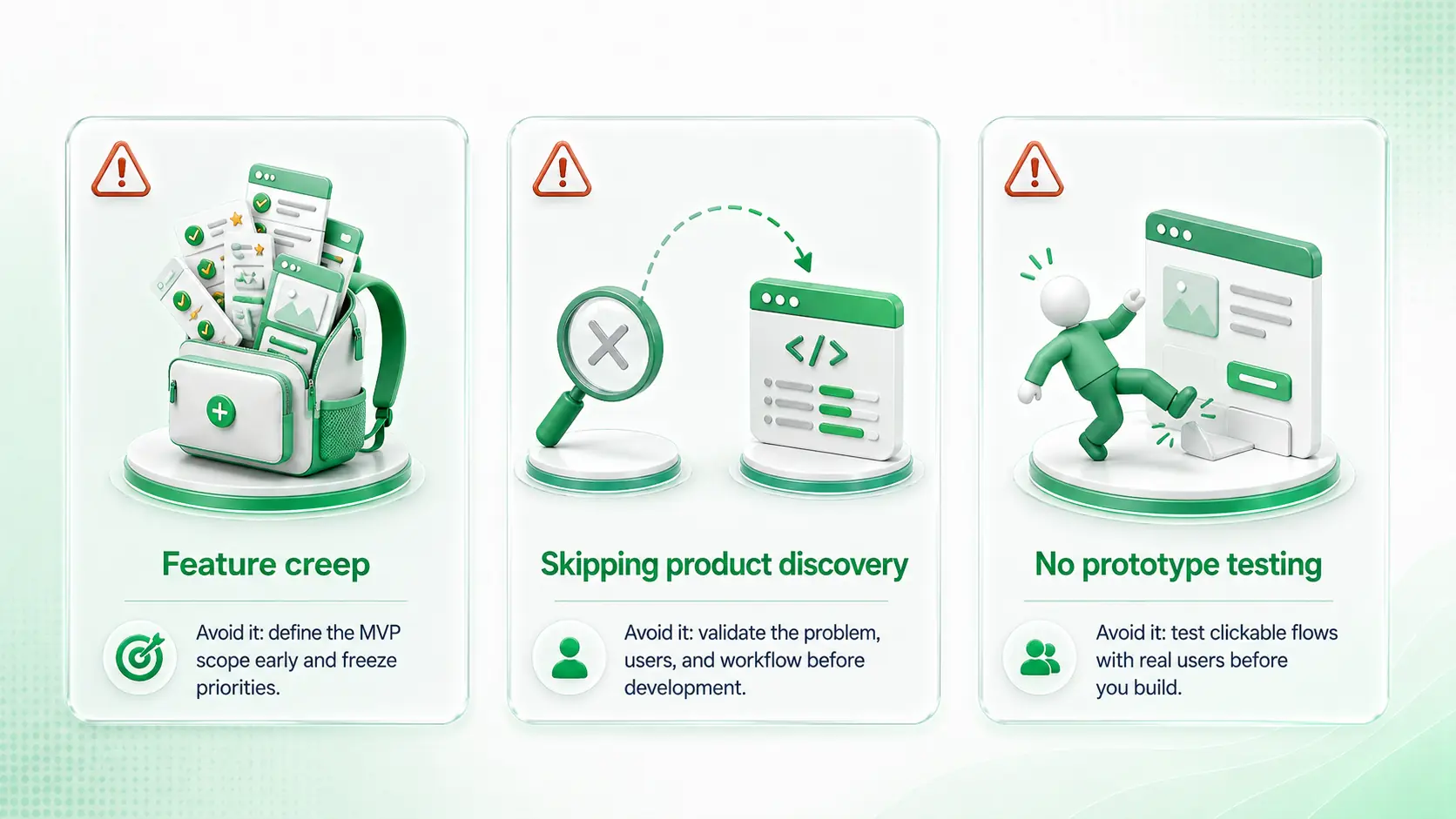
Mistake 1: Feature creep. Wanting to launch everything at once - subscriptions, a referral program, a mobile app, integrations with five different services - is the fastest way to never launch at all. Every added feature isn't just development time; it's testing, maintenance, and one more place things can break. How to avoid it: a hard "must-have for v1.0" list, with everything else pushed to the backlog for the next iteration.
Mistake 2: Skipping the product discovery phase and jumping straight into development. It's tempting - it feels like it saves two weeks. In practice, the team ends up building what the founder pictured in their head, not what users actually need, and the gap only shows up after launch, when fixing it costs far more. How to avoid it: even a single week of structured user interviews can save you from the most expensive mistakes.
Mistake 3: Never testing the interactive prototype with real people. The team being confident the design is "intuitive" doesn't mean people seeing it for the first time will agree. The real cost of this mistake is a rebuilt frontend a month after launch, once users start getting stuck at the same step, over and over. How to avoid it: five to seven prototype tests with first-time viewers cost a single day and save weeks of development.
What This Actually Costs - No Vague "It Depends"
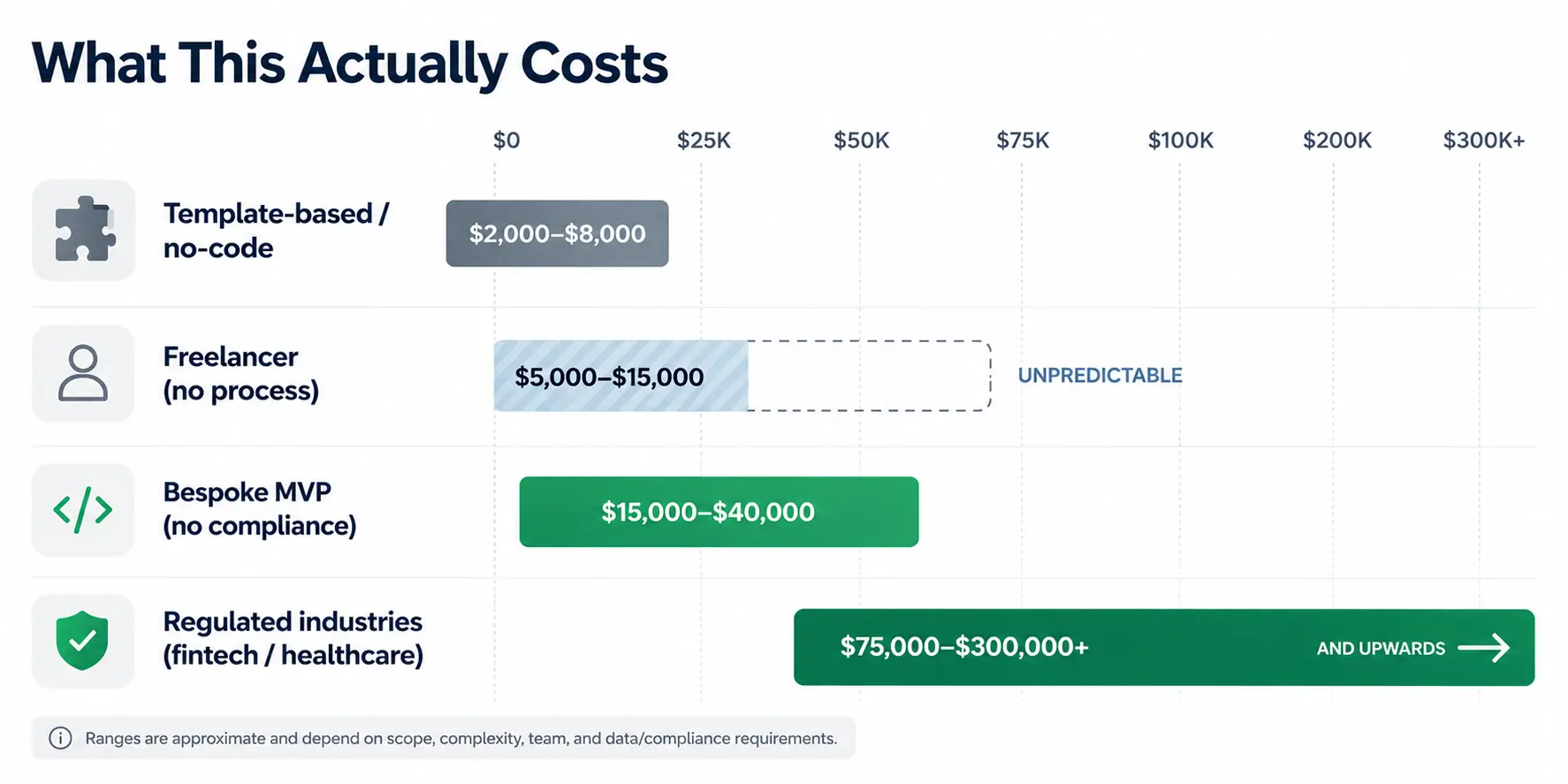
MVP pricing for custom MVP development in 2026 typically runs $15,000–$40,000 - and that's a benchmark for a small-to-medium MVP with no heavy regulatory requirements: a web app, a basic SaaS tool, a product built around a single core hypothesis to test. More complex business logic, more integrations, and a standalone mobile app in addition to the web version all push the MVP cost toward the higher end of that range.
For fintech, healthcare, AI-heavy products, or anything requiring HIPAA, PCI DSS, or SOC 2 compliance, that range no longer applies: budgets typically start at $75,000 and can climb to $300,000 or more, because compliance and security get baked into the architecture from week one instead of being bolted on afterward. That's not a flat rate - it's a range tied to the specifics of the project. Any agency quoting a fixed number before the discovery phase is either guessing or underbidding.
| Approach | Estimated Budget | Time to Launch |
|---|---|---|
| Template-based / no-code | $2,000–$8,000 | 2–4 weeks |
| Freelancer, no real process | $5,000–$15,000, often with rework | Unpredictable |
| Bespoke MVP development (standard, no compliance) | $15,000–$40,000 | 8–10 weeks |
For regulated industries (fintech, healthcare, AI-heavy products), the range shifts to $75,000–$300,000+, and sometimes higher.
Solid MVP development services cover the full cycle - discovery, design, development, QA, and launch - so there's no hidden line item that shows up mid-project.
MVP pricing is worth thinking about not as a drain on a startup's limited runway, but as a way to spend part of your seed funding efficiently enough that you never have to go back for a second round of investment just to rebuild something that didn't work the first time. The real ROI of MVP development isn't the weeks you saved - it's never having to build the product twice: first the wrong version, then the right one at a much higher price. Investing in custom software development upfront is almost always cheaper than the cost of fixing mistakes after the fact.
Conclusion: Your Next Step
Going from idea to first customer in 8–10 weeks isn't magic, and it isn't a marketing promise - it's a sequence of specific decisions. An honest product discovery phase instead of assumptions. A prototype before a single line of code. Real scope discipline instead of trying to do everything at once. Bespoke MVP development works precisely because none of these steps exist as a checkbox - each one exists to save time and money at the next stage.
If you've got an idea and a deadline set by a limited budget rather than ambition, start with a short conversation - not by hiring the first freelancer you find.
We're a bespoke MVP development company offering full-cycle MVP development services - from the first brief to your first paying customers. Book a free consultation: in 30 minutes, we'll give you an honest read on whether your idea is ready for market validation right now, and what it'll take to get your first version to product-market fit instead of leaving it as one more unfinished project in the archive. Drop us an email or fill out the form on our site - we respond within one business day.
The most expensive MVP is the one you had to build twice.